The Role of Aesthetic Training in Providing Safe and Effective Treatments
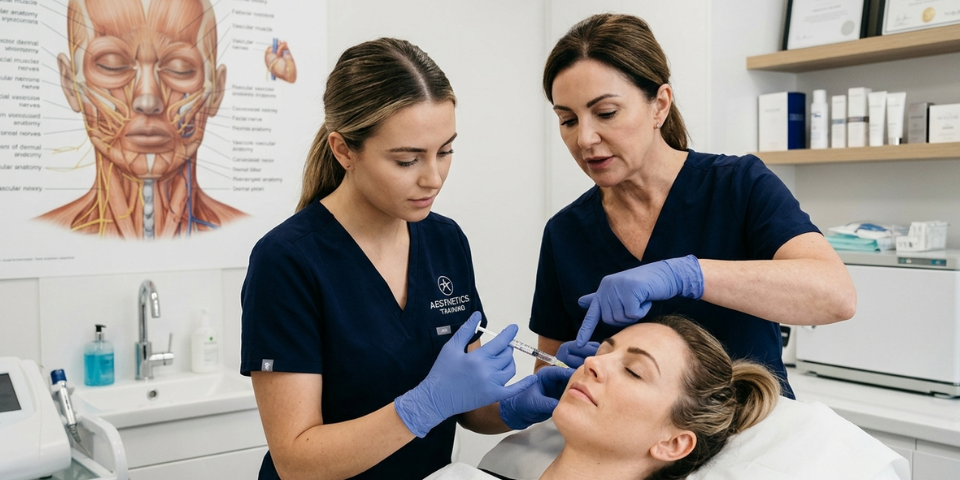
Running a Medspa or aesthetic clinic is a serious business. The treatments you offer carry real risk. The clients in your treatment rooms trust your team with their skin, their confidence, and sometimes their health.
That trust is earned one way. Through proper training.
At our institute, we work with nurses and aestheticians every day who want to do this work well. Not just competently — genuinely well. This post is for the practices and professionals who feel the same way.
Why Training Is the Foundation of Every Safe Treatment
Equipment matters. Products matter. Your clinic environment matters.
But none of it protects a client the way a trained provider does.
A qualified nurse or aesthetician understands what’s happening beneath the surface — literally. They know where the facial vasculature sits. They understand how different skin types respond to energy-based devices. They can spot a contraindication in a consultation that a less experienced provider would miss entirely.
That knowledge doesn’t come from watching videos online. It comes from structured, hands-on training delivered by people who have spent years in clinical practice.
Here’s what properly trained providers bring to every treatment:
- The ability to assess a client’s skin accurately before recommending a protocol
- Confidence in device settings and treatment parameters for individual skin types
- Clear understanding of when not to treat — and how to explain that to a client
- Practical skills to manage adverse reactions calmly and correctly
- Detailed knowledge of aftercare and how to monitor client outcomes
That last point matters more than most practice owners realize. Managing a complication well is as important as preventing one. Both require training.
Does It Matter Whether Your Staff Are Nurses or Aestheticians?
This question comes up constantly. The honest answer is that both roles are valuable — and both require serious, role-appropriate training.
Nurses bring clinical depth. Their knowledge about patient assessment, pharmacology and anatomy offers a significant advantage. It shows that as experienced professionals in administering laser therapy, injectables and other treatments without risks.
Their background in anatomy, pharmacology, and patient assessment is a significant advantage in treatments involving injectables, laser therapy, and anything with medical risk. When things go wrong in the treatment room, a nurse’s clinical training kicks in.
Aestheticians bring a different kind of expertise. Skin knowledge, treatment technique, client relationship skills, and a deep understanding of protocols across devices. A well-trained aesthetician delivers consistent, excellent results and builds the kind of client loyalty that sustains a business.
The two roles complement each other. The best clinics have both and invest in training for both.
What we don’t recommend is treating training as optional for either group. A nurse without aesthetic-specific training can still cause harm. An aesthetician without structured ongoing education falls behind quickly in a field that moves this fast.
What Should Quality Aesthetic Training Actually Cover?
Not all programmes are equal. This is something we’re direct about with every practice that partners with us.
A training programme worth investing in goes beyond device operation. It should cover:
- Facial Anatomy & Skin Physiology — The clinical foundation of medical aesthetics.
- Client Assessment & Contraindications — Evaluating a client for treatment and referring them to a specialist.
- Treatment Protocols Across Device Categories — Body contouring, RF, microneedling, lasers, and injectables.
- Adverse Event Management — Protocols for when a problem occurs during treatment.
- Infection Control & Clinical Hygiene — Non-negotiable in any treatment environment.
- Client Communication & Consent — How to have honest pre-treatment conversations.
- Business and Compliance Basics — Documentation, record-keeping, legal responsibilities.
If a programme doesn’t cover all of this, it’s not preparing your staff for real clinical practice. It’s preparing them to press buttons.
How Does Investing in Staff Training Benefit Your Business?
The return is real. And it shows up in multiple places.
Better-trained staff deliver better results. Better results drive word of mouth. Word of mouth in aesthetics is still the most powerful growth channel available to a practice.
But the benefits go further:
- Retention — Trained staff feel valued and stay longer. Turnover in aesthetics is expensive
- Confidence — Providers who know what they’re doing communicate that in every consultation
- Fewer Complications — Proper training reduces adverse events, which protects your reputation and reduces risk
- Expanded Service Menu — Qualified staff can offer a wider range of treatments safely
- Regulatory Compliance — In an industry facing increasing scrutiny, trained staff protect your license to operate
One adverse event handled poorly can undo years of reputation building. One well-trained provider can prevent it from happening in the first place.
What Makes Our Training Different?
We built our programmes around one question. What does a provider actually need to know to keep a client safe and deliver a result worth talking about?
Everything we teach comes back to that.
Our courses combine clinical theory with extensive hands-on practice. Nurses and aestheticians train alongside each other, learning from instructors who are still active in clinical practice — not just educators who stepped out of the treatment room years ago.
We also don’t believe training ends at certification. The field moves too fast for that. Our continued education programmes keep your team current on new devices, updated protocols, and evolving best practices.
The Bottom Line
Your clients trust your team. That trust is built in the treatment room — but it starts in the training room.
Investing in proper aesthetic training isn’t an overhead cost. It’s the investment that protects everything else you’ve built.
If you want to talk about training options for your nurses or aestheticians, we’d welcome the conversation.


Comments are closed.